The Compact Loaf
A 400-gram Panasonic bake
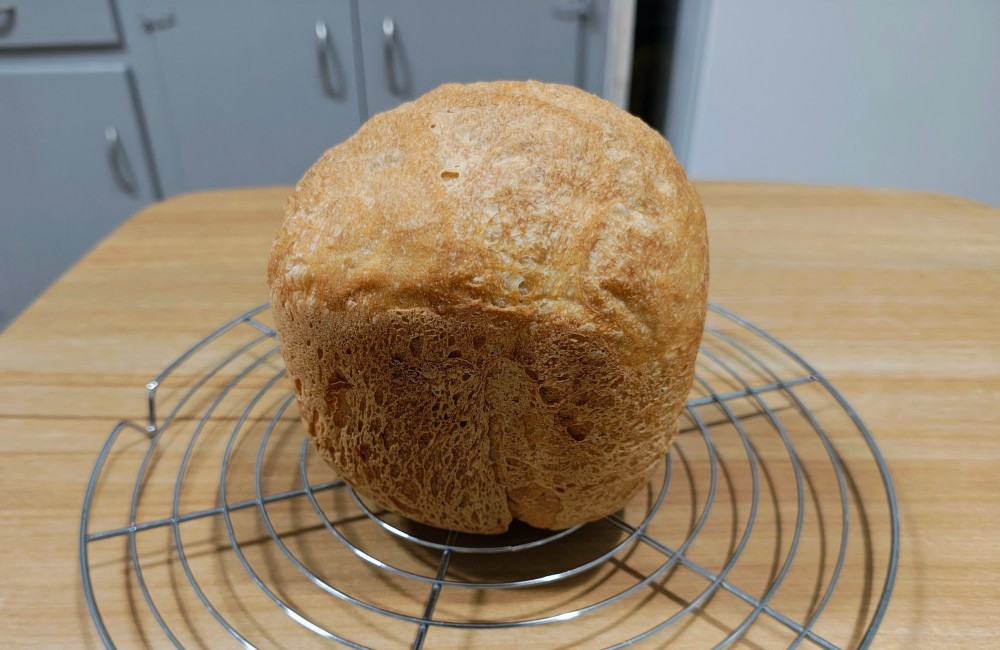
This page is a public note and a private crib sheet: the machine, the bags on the shelf, and the one water measure that stopped being an argument.
The point of the formula is a good loaf with a modest potassium load. Store bread left the house more than a year ago. This one is simply better to eat. Four hundred grams is the right size for one or two people: there are no preservatives, so the loaf does not keep for long, which is why two or three bakes a week is the rhythm.
The machine
Panasonic SD-PN100KXE — the small 2022 European model. Official flour load: 250 g. Finished loaf: about 400 g, roughly 13 × 13 × 12 cm.
Program: Basic, about four hours. Rapid saves time and costs volume and flavor.
This pan loads the opposite way from many other machines. The manual is right:
- Dry yeast in the bottom
- Flours
- Salt, sugar, fat
- Water last
Yeast: Lesaffre Saf-Instant. After the 500 g pack is open, keep a few days’ worth in small airtight boxes in the fridge; freeze the rest.
Water: 170 ml. That number held across T55, Caputo, and rice-flour blends. Use lukewarm water only when the kitchen is cold. Never hot.
A little olive oil keeps the crust from turning into a lid. With no fat, the crumb stays wetter than it should.
Why two flours
This is not a gluten-free loaf. Wheat does the work. A fifth of the bowl is white rice flour because it softens the crumb and keeps the formula on refined, lower-mineral flours.
| Weight | Role | |
|---|---|---|
| Caputo Manitoba Oro (Type 0) | 200 g | Structure and spring in a short machine cycle |
| White rice flour | 50 g | Softer crumb; a modestly lower mineral load than an all-wheat loaf |
Cornstarch (maize starch) was a dead end: the loaf rose and then sank. It does not come back.
Portuguese supermarket rice flours, coarsest to finest in this bowl: Espiga → Ceifeira → Cem Por Cento. The bag worth hunting is Caputo Nuvola di Riso (or Sarchio impalpabile) when it is in stock. Finer rice flour absorbs more cleanly and dries the crust a little.
Caputo wheat: three bags, three jobs
Italian “00” and “0” are ash grades — how thoroughly the bran is milled out — not strength. Strength is protein, and the mill’s W number.
W is a dough-strength index from the Chopin alveograph: a standard mill test that blows a thin sheet of dough until it bursts. A higher W means the dough can hold gas for longer. It has nothing to do with electrical power.
| Flour | Protein | Strength | Machine loaf? | What you get |
|---|---|---|---|---|
| Manitoba Oro (Type 0) | ~14–14.5% | High (W 360–390) | Yes — first choice | Tall loaf, elastic crumb; holds up with 20% rice flour |
| Cuoco (Chef’s, Type 00) | ~13% | Medium-high (W 300–320) | Yes | A little shorter than Manitoba; still a good everyday loaf |
| Pizzeria (Blue bag, Type 00) | ~12.5% | Medium (W 260–280) | Usable, not ideal | Tighter crumb, less height. Milled for pizza, not a four-hour pan |
Saccorosso sits nearer Cuoco than Manitoba: usable, not the first choice here.
When the Manitoba bag is empty, buy Manitoba again. Switching to the blue pizza bag to shave a few milligrams of minerals is not worth the shorter loaf.
Storage
Caputo ships in 5 kg paper. Here in the Ribatejo, a hot inland region of Portugal, a paper bag in the pantry is not enough in summer. Keep the working few kilos in an airtight bin; clip the rest of the bag shut in the coolest cupboard.
The loaf lives in a bread tin, not a linen bag. Linen keeps the crust proud and dries the crumb. After a season of crusts that were too hard, a soft crumb and a soft crust in a tin is the point.
What this is not
It is not pizza dough and it is not a bakery schedule. It is one small loaf, the same water every time, and two flours with jobs that do not overlap.